
Not sure it fits your cell? Book 20 minutes with an engineer who has specified this part before.
Book a callOrdered the wrong size or interface? Here is exactly how sending it back works.
RBTX
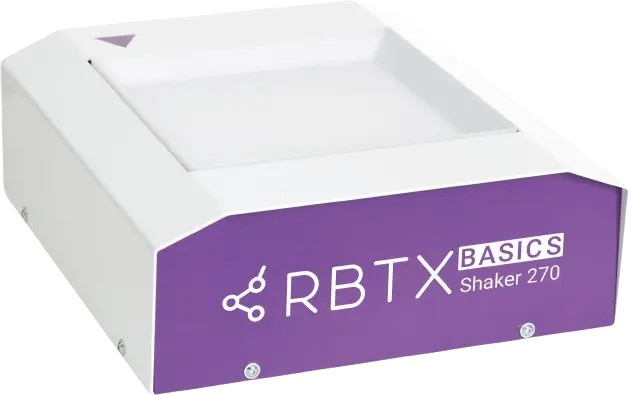
Vibratory component separator with manual frequency and amplitude tuning. Singulates bulk parts for robotic or vision-guided picking at low cost. Footprint 396 x 345 x 128 mm. Offered as engineering study without CE certification.
Variobotic RBTX Vibratory Separator, Manual Tuning is a low-cost vibratory component separator designed for engineers and integrators needing manual frequency and amplitude adjustment for robotic or vision-guided picking applications.
Developed by Variobotic specifically as part of the RBTX ecosystem, this vibratory separator efficiently spreads and singulates bulk parts for reliable presentation to robotic arms or vision systems. Mechanical settings allow budget-conscious users to optimize performance without web-based or automated configuration. Ideally suited for material handling, component separation, and as a feeder in industrial automation cells where flexibility and low cost are priorities.
Frequency and amplitude are set manually, providing simple, hands-on control to achieve optimal performance for each unique part geometry. The straightforward adjustment mechanism ensures users can quickly adapt the separator to changing production requirements.
RBTX Vibratory Separator, Manual Tuning integrates easily with existing robotic picking systems and material handling solutions. Axton engineers offer comprehensive advice to confirm application compatibility, supporting users throughout configuration.
The Variobotic RBTX Vibratory Separator is provided as an engineering study and is not CE certified or bundled with production documentation. Consult with our engineering team to verify suitability for your needs before procurement.
Choose the genuine Variobotic RBTX-BASICS-0005 with engineering-backed support for reliable, budget-friendly part singulation.The RBTX Vibratory Separator suits engineering projects and tight cells where hands-on tuning beats fixed automation or web-controlled systems. Choose it when you need low cost, compact footprint, and direct control over frequency and amplitude for diverse part geometries.