
Not sure it fits your cell? Book 20 minutes with an engineer who has specified this part before.
Book a callOrdered the wrong size or interface? Here is exactly how sending it back works.
SICK
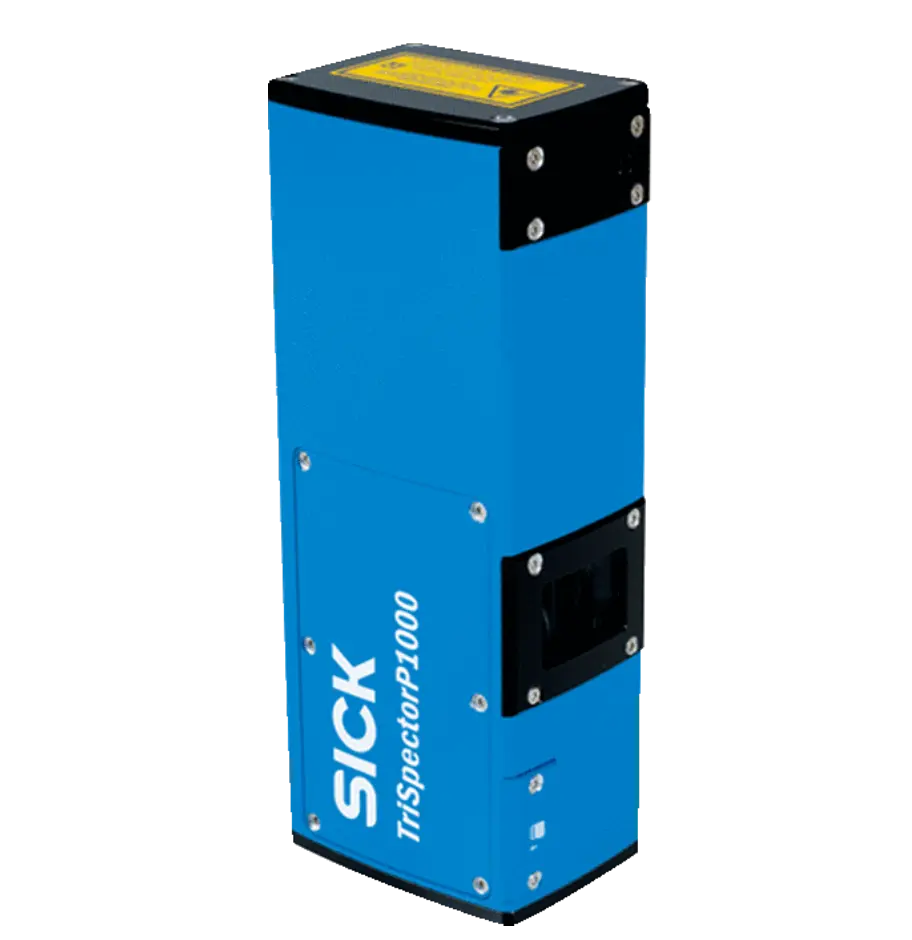
SICK TriSpectorP1000 3D machine vision system for automated belt picking. Captures 3D profile data across a 270×100 mm field of view with integrated encoders that synchronize vision capture to conveyor belt motion for real-time object detection and positioning. Includes mounting hardware, cables, and belt-pick encoders.
The SICK TriSpectorP1000 3D machine vision system is a compact industrial machine vision camera designed for high-precision belt picking, object detection, and position tracking on moving conveyors in automated production environments.
The SICK TriSpectorP1000 3D machine vision system delivers precise three-dimensional profile data to automate tasks such as pick-and-place, part orientation, and object sorting. The system's design supports fast integration into conveyor-based workflows for sectors like logistics, automotive, and packaging. The included encoders allow the TriSpectorP1000 to maintain accuracy by synchronizing machine vision capture with belt movement at all speeds.
Unlike 2D cameras or basic sensors, the TriSpectorP1000 3D machine vision system enables continuous and reliable identification of products in dynamic, high-throughput environments. Its large field of view and hardware-synchronized encoders differentiate it from simpler machine vision solutions lacking 3D capability or conveyor integration.
Engineered by SICK, the TriSpectorP1000 is part of the TriSpector series and attaches directly to conveyor lines via included mounting hardware. Connectivity is established with 5-meter data and power cables plus a drive input voltage splitter for streamlined installation with standard automation equipment.
The TriSpectorP1000 captures full 3D profiles across a 270x100 mm field of view, making it suited for high-throughput pick-and-place and sorting where part location and orientation must be detected reliably on moving belts. Synchronized encoders lock vision accuracy to conveyor speed in real time, eliminating timing errors that simpler sensors cannot handle.